
Morgan Civil Docket Case Families
Every Morgan County civil docket number tells you something before you read a single entry. The number opens with the filing year, then a case-class code, then a sequence. District civil matters commonly carry CV. County civil may use C, domestic relations use DR, and probate uses PR. The state record request form also groups small claims under S. So 2026CV##### sits in a different case family from 2026DR### or 2026PR#####. The code narrows a docket search fast. It cannot tell you who won. It still helps you pick the right document on a clerk request. Use the full number printed on a complaint, notice, or order whenever you have it.
- CV
- General civil case in Morgan County District Court.
- C
- County civil matter in Morgan County Court.
- DR
- Domestic-relations case.
- PR
- Probate case.
- S
- Small-claims class referenced by the state request form.
How to Search Civil Dockets
Need a hearing date? Open the free Colorado Judicial Branch Docket Search and select Morgan County. The interface demands a date or date range plus at least one more filter. If you know the three-part case number, search with that. Party searches can use an individual first and last name. A business name works too. Attorney name and bar-number fields are also there. Remember what you are looking at. Results show hearing details, not every filing in the case. Follow this search order. It keeps a calendar entry from being mistaken for the complete Morgan County civil docket record.
- Identify Morgan District Court or Morgan County Court from the filed paper.
- Select Morgan County, a date, and the case number, party, or attorney filter.
- Match the full number, party role, hearing type, and courtroom.
- Use CoCourts or request an ROA for the chronological case summary.
- Request the exact judgment, order, or other filed document from the Morgan clerk.
When the online docket search falls short, other channels work. The statewide request form can be submitted online. The Clerk of Court takes inquiries at MorganClerksOffice@judicial.state.co.us. Phone questions reach 970-542-5200 x4. In-person and mail requests go to Morgan Combined Court, 400 Warner Street, Fort Morgan, CO 80701. Confirm mailing and payment directions before you send any funds. Ask about paper inspection too. A public terminal may be available, depending on the record's security level.
Morgan Civil Docket CCE Access
Colorado Courts E-Filing, called CCE, is the filing system. It is not the public Morgan County civil docket search. Self-represented users can register and opt into their own supported domestic-relations or eviction case. The official instructions say opt-in may take up to two business days. Once accepted, the user gets round-the-clock document access. That access covers the supported case. The Judicial Branch self-represented e-filing page covers the full scope of CCE access. It also spells out the limits.
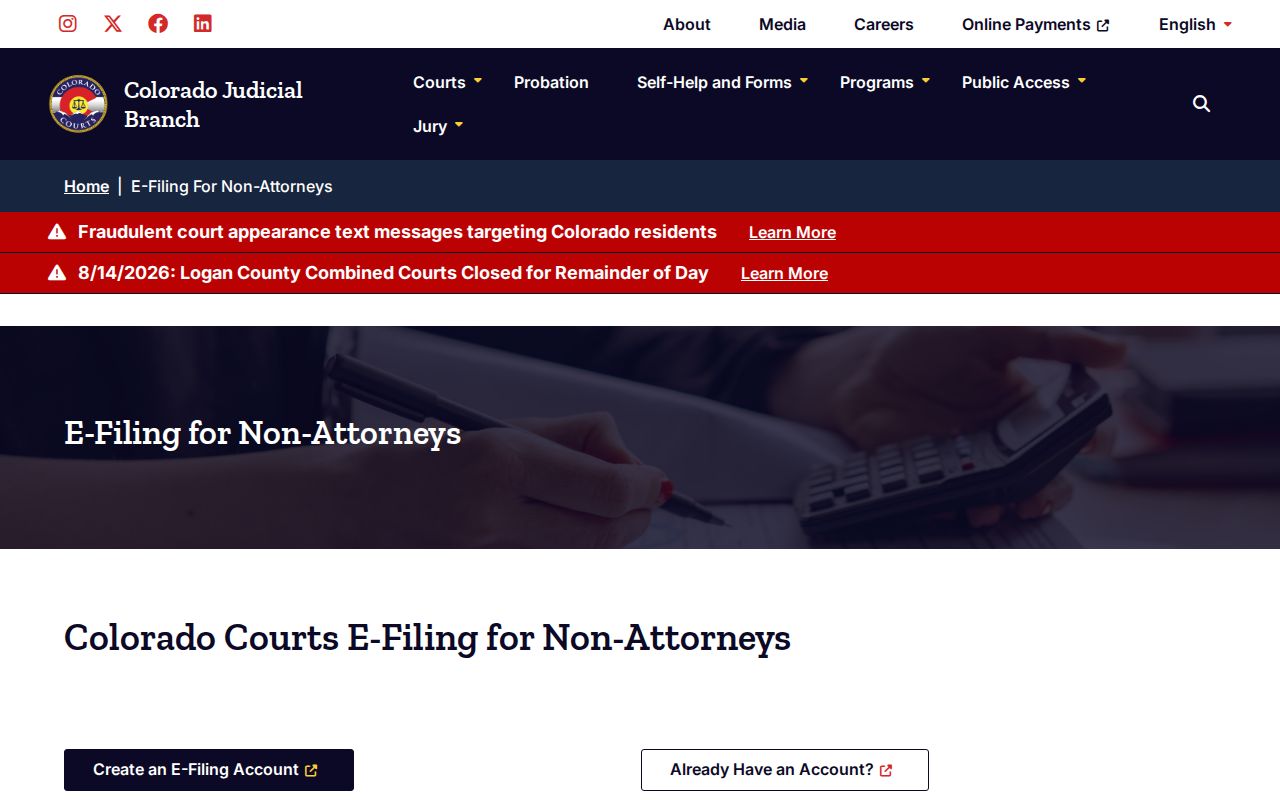
That official page reinforces one key limit. CCE access turns on the user's role and a supported case type. It is not an open viewer for unrelated Morgan County civil dockets. Costs work differently here too. A statutory filing fee, the $12 CCE filing charge, and service fees are filing costs. They are not clerk copy charges. The Branch removed a third-party certification prompt after a change in law. The June 2026 CCE access update records that fact.
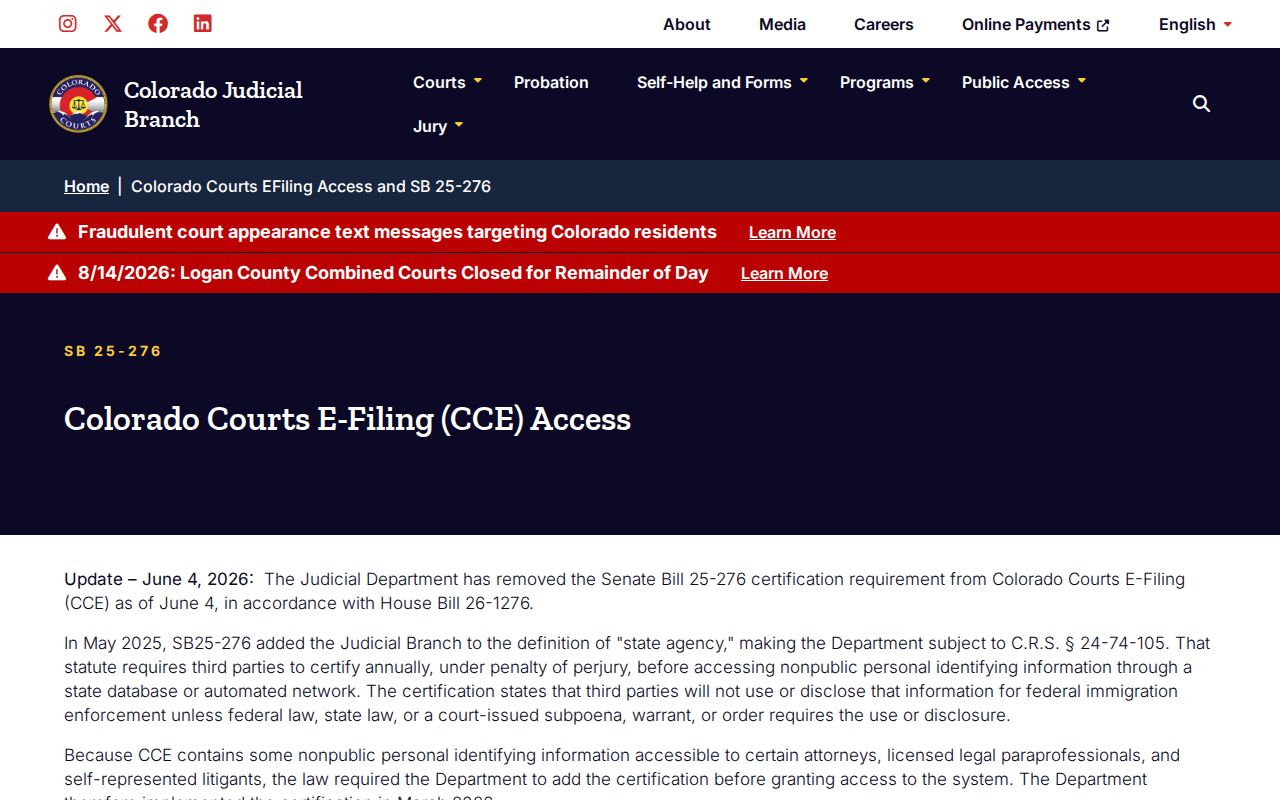
That update touched the statewide system Morgan cases run on. Registered users needed to do nothing when the prompt went away.
What a Civil Docket Shows
Think of a Morgan County civil docket or ROA as the case's chronological index. It may list the class and party roles. Filing events, minute orders, settings, disposition, judgment, and post-judgment events may appear too. A filing entry proves only one thing. A document entered the record. It does not prove the judge granted the request. For that answer, look for a signed order or judgment.
| Case number | Year, civil class, and sequence identifying the Morgan file. |
|---|---|
| Party role | Plaintiff and defendant, or petitioner and respondent, depending on the case. |
| Filing event | A complaint, petition, answer, motion, or other accepted document entry. |
| Setting | A scheduled conference, hearing, return date, or trial event. |
| Order | A court direction, distinct from the motion that requested it. |
| Judgment | A final or enforceable civil determination, depending on context. |
The free calendar carries a smaller field set. You get date, time, duration, a displayed party or caption component, case number, hearing type, Morgan location, appearance field, and courtroom. That is all. It does not display the complaint PDF, claim amount, service return, full attorney list, judgment amount, downloadable order, or certified status.
Morgan Civil Docket Caption Limits
A name in the Morgan hearing calendar may be one party. It may also be one slice of the caption. It is rarely the full case style. Civil files can hold several plaintiffs, defendants, petitioners, respondents, or other roles. The public setting result shows just enough data to identify the calendar event. Match the displayed name to the full Morgan County civil docket number before you conclude anything. The ROA can identify case class and party roles more fully, subject to security limits. The complaint, petition, or later order supplies the formal caption. This check matters most when people share a name. It also matters when a business appears in the case.
Missing Morgan Civil Docket Filings
Sometimes a motion shows up in the Morgan County civil docket. The PDF stays out of reach. That is expected. The ROA and the document file are two separate layers. First confirm the entry is a filing rather than an order. Then name the exact document on the trial-court request form. Include the case number and approximate filing date. Select certification only if you need an authenticated clerk copy. The official Record/Document Request Form spells out the civil choices. Those are Order for Judgment, Transcript of Judgment, Satisfaction of Judgment, and Protection Order. It also lists probate documents. Those run Letters, Will, Trust, Application, Petition, Closing, and Claims, plus the ROA itself.
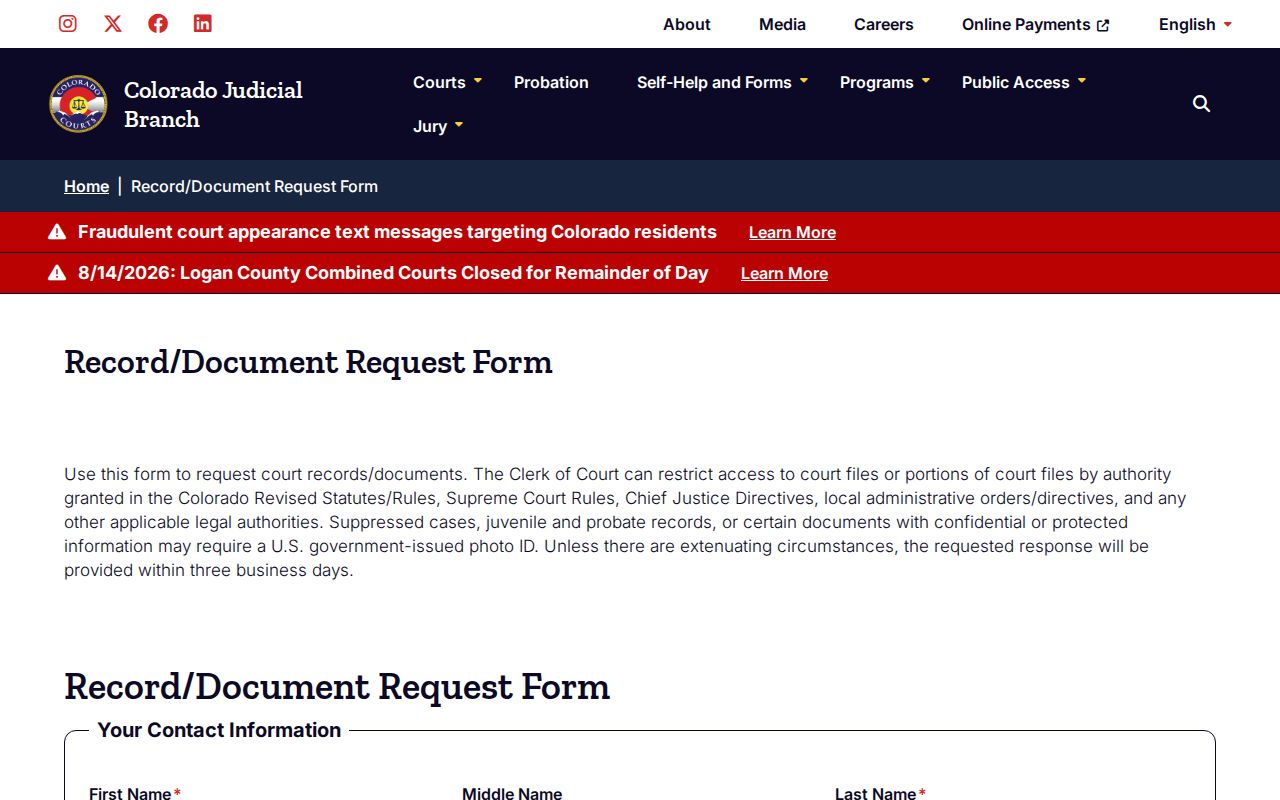
The request form is what turns a docket line into the real filing. Its fields also let the clerk reach you and send the request to the right court.
Key point: A listed motion is a request. Only the later order shows whether and how the court ruled.
Types of Civil Cases on the Docket
Morgan County District Court takes the big categories: general civil, domestic relations, and probate. Morgan County Court handles the smaller ones. Its docket includes limited civil, small claims, evictions, foreign judgments, name changes, protection orders, and replevin. Those categories are listed on the CCE availability page. Replevin means asking for personal property back. Municipal courts mostly enforce city ordinances, not private civil disputes.
- General civil claims filed in District Court
- Domestic-relations matters using DR numbers
- Probate matters using PR numbers
- County civil and small-claims cases
- Eviction, protection-order, and replevin matters
The civil dollar limits are not something to guess at. Never pick a court by an assumed amount. The caption, case class, and filing court on the paperwork tell you the truth.
Morgan Civil Docket Probate Requests
Probate runs through the Morgan District Court channel. The case numbers usually start with PR. On the clerk's request form, the probate choices are Letters, Will, Trust, Application, Petition, Closing, and Claims. You can also ask for the Register of Action. Naming the exact record beats asking for an undefined whole file.
Probate access works differently from ordinary public civil access. The form warns that government photo identification may be required. That applies to probate, suppressed, juvenile, or protected information. A public Morgan County civil docket entry does not promise that every filed image can be released. Give the case number, document title, and approximate filing date. Then follow the clerk's access and fee instructions.
Morgan Civil Docket Court Split
Both state trial courts share one clerk. That convenience does not erase the split. Morgan District Court holds general civil jurisdiction. Morgan County Court carries the limited civil, small-claims, and eviction track. The building and phone number are the same, but the case classes are not interchangeable. Search under the court named on the filing.
The official Morgan County trial-court page is the local starting point. It covers closures, staff, and docket access. District divisions serve the wider 13th Judicial District, so a judge may sit in more than one county. The Morgan location plus the complete case number will find a case faster than a judge's office.
| Court | Morgan civil docket includes | Primary code clues |
|---|---|---|
| Morgan District Court | General civil, domestic relations, probate | CV, DR, PR |
| Morgan County Court | Limited civil, small claims, evictions, other listed county matters | C and S groups |
| Municipal courts | Ordinance enforcement, not ordinary private civil claims | City-specific |
Settings and Hearings on Civil Dockets
Civil settings come with labels. You might see Case Management Conference, Initial Conference Appearance, Permanent Orders Hearing, NonContested Hearing, Return Date on Summons, or other hearing descriptions. Match the event to the full Morgan County civil docket number. A displayed party name can be one caption component only.
A case-management conference plans progress and next steps; it decides nothing on the merits. NonContested describes the setting, not every part of the case. A return date is the first date a summons requires in some County Court matters. Permanent orders handle final domestic-relations issues. For what actually happened, the order and ROA control.
A continuance moves a hearing, but the old event may sit in the chronology anyway. Find the later notice, minute entry, or order. Recheck the free calendar near the date. Call the clerk if it conflicts with a written order. A blank appearance field does not authorize remote attendance.
Morgan Civil Docket Judgment Records
Judgment records do different jobs. An Order for Judgment records what the court decided. A Transcript of Judgment, used for enforcement, carries a published $25 charge. A Satisfaction of Judgment shows the debt was paid or otherwise satisfied. It never replaces the original judgment.
Post-judgment Morgan County civil docket entries may also show enforcement or appeal. Default follows a failure to respond or appear as required. A missed calendar listing alone proves nothing. Dismissal, voluntary dismissal, stipulated order, judgment, and satisfaction each carry distinct effects. So read the signed document.
| Record | What it establishes | Published charge |
|---|---|---|
| Plain copy | Copy of the filed document without clerk authentication | $0.25 per page |
| Certified or exemplified copy | Clerk-authenticated document | $20 per document, plus copy costs as applicable |
| Transcript of Judgment | Separate judgment enforcement record | $25 |
| Name search | Clerk search when the number is unknown | $5 |
Public Access to Civil Dockets
Chief Justice Directive 05-01 governs Colorado court-record access, Morgan County civil dockets included. A record may be public, protected, restricted, suppressed, or sealed. Protected material can need redaction first. The other three levels narrow who may view it. Probate, protection-order, domestic, and other files can hold portions closed to a public search.
The free Branch calendar shows public hearing data. A commercial vendor supplies real-time ROA access under its own terms. CCE depends on user role and case type. For filed documents and certified copies, the Morgan clerk is the office, with government photo identification possible for suppressed, juvenile, probate, or protected information. A case missing online is not proof it does not exist.
Access rules: CJD 05-01 controls court records and security. C.R.S. §13-32-104 supports copy and fee rules. The Colorado Open Records Act covers records of agencies within its reach, while Judicial Branch case records follow court-specific authority.
Bulk and compiled data requests face separate controls. For an ordinary Morgan County civil docket or judgment, use the court search, ROA, and clerk request channels instead.
Older Morgan Civil Docket Files
Older Morgan County civil docket files are not always at the courthouse. Some sit in off-site storage. Others have been moved to the Colorado State Archives. So ask the clerk where a particular file is held before you assume the Fort Morgan counter can pull it. The court's request form allows off-site retrieval at actual cost, and it promises a normal response within three business days absent extenuating circumstances, though retrieval time can stretch that out.
Administrative records travel a separate route. Colorado Supreme Court Chapter 38, Rule 2, known as PAIRR 2, covers Judicial Branch administrative records like budgets and policies. It is not a substitute for the case-file request form. The May 2026 PAIRR 2 rule-change notice spells out the updated statewide procedure.
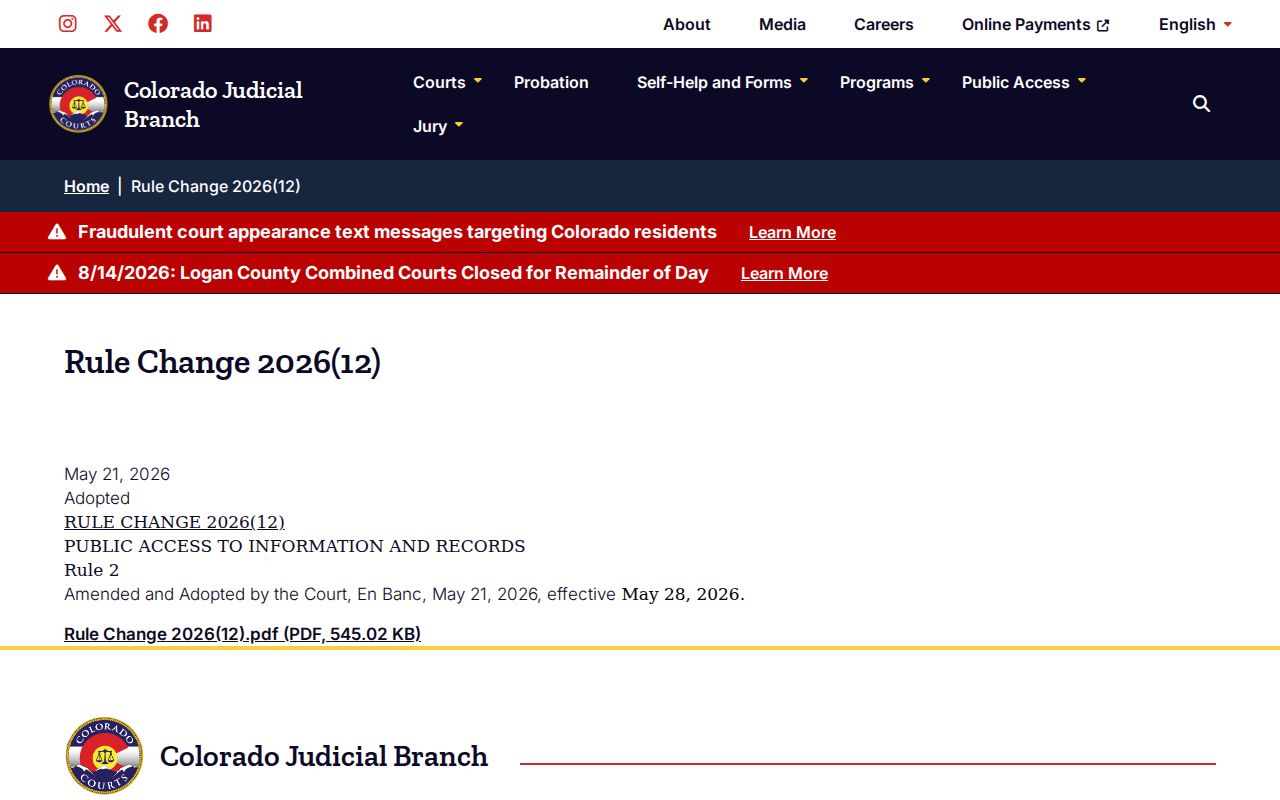
That rule notice is useful for one thing above all. It shows when you are chasing an administrative record rather than a court document. A Morgan judgment, order, or ROA belongs to the Clerk of Court. It still goes through the trial-court record form.
When an older file goes missing, give the clerk everything you can. That means the complete case number, the caption if you know it, the exact document title, and an approximate filing date. Then follow the clerk's estimate and instructions from there. Do not read a blank current calendar as proof. The Morgan County civil docket may still have been filed.